🏛️ The Ancient Roots: The Sacred Text
While it is common today to blame family estrangement on modern financial issues, personality clashes, or shifting social norms, the agonizing psychological toll of cutting off a parent is not a modern invention. We can trace the devastating weight of a ruptured parent-child bond back 2,700 years to the Spring and Autumn period of ancient China.
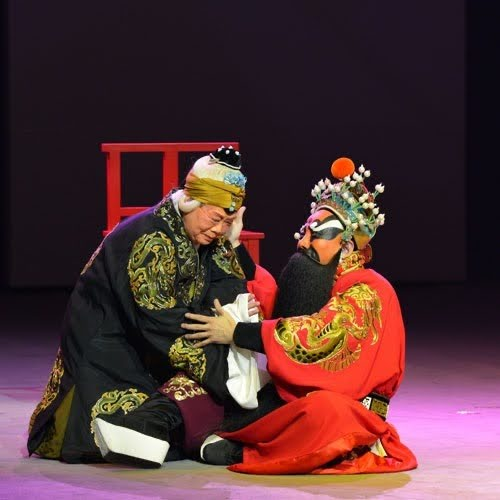
The classic text of the Zuo Zhuan (The Commentary of Zuo) records the true, legendary story of Duke Zhuang of Zheng and his mother, Wu Jiang—a raw narrative of betrayal, severe estrangement, and the ultimate, unavoidable gravitational pull of filial love. It stands as a timeless warning that the pain of living with a broken family thread is often far worse than the pain of the original wound.
📜 The Living Legacy: The Vow and the Underground Tunnel
The Roots of Betrayal
Duke Zhuang was born with the childhood name Wusheng, meaning “difficult birth.” Because she suffered through an extraordinarily painful delivery with him, his mother, Wu Jiang, harbored a lifelong disdain for him and heavily favored her younger son, Gongshu Duan.
When Duke Zhuang ascended to the throne, his mother violently objected from the shadows. She began plotting a coup to overthrow him. She successfully pressured the Duke into gifting his younger brother a massive fortress city, which was then used to stockpile arms, recruit mercenaries, and prepare a civil war. She promised her younger son that she would personally throw open the gates of the capital city for him when the rebel army arrived.
The Great Rebellion and the Cutoff
For a long time, Duke Zhuang’s ministers urged him to attack, but the Duke repeatedly refused, stating he could not bear to take up arms against his own flesh and blood. However, when the rebellion finally ignited, the Duke’s tactical forces easily overpowered the rebel army.
Faced with absolute defeat, the younger brother committed suicide. Upon finding his brother’s corpse, Duke Zhuang wept bitterly, crying out: “You knew that your older brother would always forgive you; why has it come to this?”
Aghast and broken by his mother’s ultimate betrayal in orchestrating the war, the Duke immediately placed her under strict, permanent isolation. Boiling with rage and hurt, he made a fierce, absolute vow to her: “We will not meet again until we are under the ground!”
The Pain of Isolation
For a short time, the Duke lived without his mother in his life. But soon, the brutal reality of the estrangement set in.
Cutting a parent out of your life—even one who has committed an egregious, traumatic wrong—is a gut-wrenching experience. For Duke Zhuang, it provoked profound feelings of shame, guilt, bewilderment, and hollow grief. He began to miss his mother deeply.
On top of the internal agony, the societal weight was enormous. Estrangement leaves both the adult child and the mother feeling relentlessly isolated from community warmth. The estranged parents left behind are left completely vulnerable—feeling entirely powerless when no contact is allowed and when they cannot even attempt to talk, apologize, or negotiate with their child.
Meeting “Under the Earth”
Duke Zhuang realized that the internal pain of living without his mother was far worse than the pain of her past betrayal. He desperately wanted to reconcile, but he was trapped by his own stubborn, public oath never to see her again “until they were under the ground” (representing death).
To circumvent his own prideful boundary, the Duke devised a brilliant engineering solution. He ordered his men to dig a massive, elaborate underground tunnel pathway linking his palace directly to his mother’s confinement quarters.
There, literally “under the ground,” the estranged son and his mother finally reunited. They embraced, wept, and buried the hatchet entirely.
🪜 The Map of Consciousness: Breaking the Cycle of Pride
This historical masterpiece serves as an intense case study for navigating the lower tiers of family friction:
- The Pitfall (Level -3: Estrangement): Driven by raw anger, pride, and valid hurt, we build absolute walls. We make vows of silence, believing that completely severing the connection will bring us peace, only to find that estrangement creates a hollow, exhausting emotional ache.
- The Warning (Level -2: Resentment): Keeping a heavy scoreboard of past parental favoritism or childhood shortcomings. Like Wu Jiang, letting old frustrations dictate current actions destroys family harmony.
- The Ascent (Level 1: Reverence): Realizing that the roots of family ultimately demand to be watered, and that forgiveness is the only path to true psychological freedom. We lower our pride, stop waiting for the other person to become perfect, and dig the tunnels necessary to rebuild basic respect.
🎴 From Wisdom to Action: Today’s Flashcard Practice
To ensure you do not let pride or unresolved friction harden into an unnecessary fortress of estrangement today, pull this practice from The Reverence Deck:
🎴 CARD #19: THE DIGGING OF THE TUNNEL
The Micro-Moment: The next time you feel a cold wall of silence, an unresolved argument, or a long-standing emotional distance hardening between you and your parent.
The Practice: Do not wait for them to make the first move, drop their pride, or perfectly apologize. Be the one who initiates the bridge.
Send a simple, completely neutral text or make a brief call to check on their well-being. Swallow the urge to bring up the old ledger of scores. Swallow your pride, swallow your rigid rules of engagement, and actively “dig a tunnel” through the silence to let them know they are still your parent, and you are still their child.
🛍️ Bring the Practice Home
If you are currently navigating difficult family dynamics, communication gaps, or seeking the path back to a harmonious relationship, explore The Reverence Action Deck in our online shop today for 15 mindful, gentle ways to lower walls and cultivate peace.